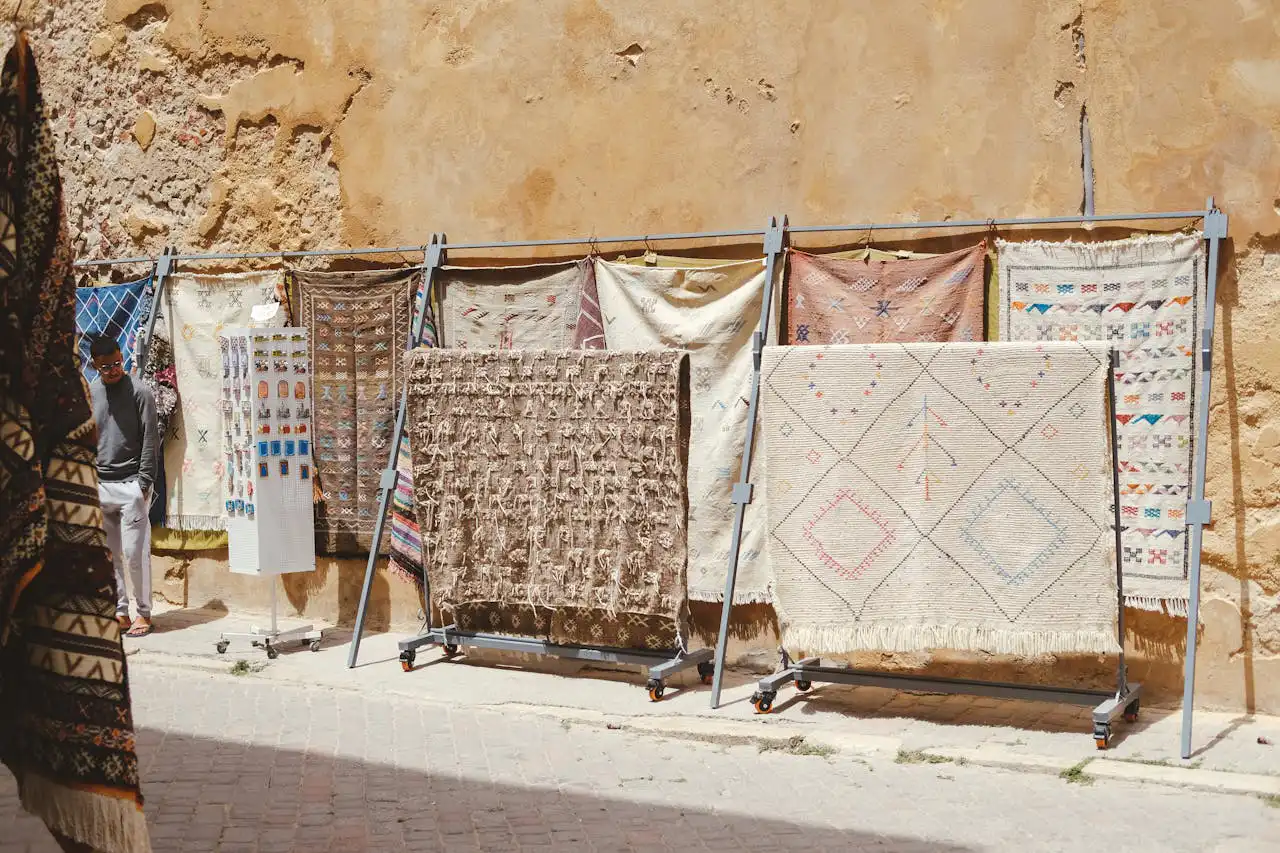
Few home décor items carry as much cultural weight and artistic depth as Moroccan rugs. More than just beautiful floor coverings, Moroccan rugs are deeply rooted in history, tradition, and identity. For centuries, Berber tribes have woven rugs not only as functional pieces for warmth and comfort but also as cultural expressions filled with symbolism, storytelling, and craftsmanship.
In this article, we’ll take a journey into the origins of Moroccan rugs, their cultural significance, and why they remain timeless works of art celebrated around the world.
Discover our authentic Moroccan Rugs Collection.
Ancient Origins of Moroccan Rugs
The tradition of rug weaving in Morocco dates back thousands of years. Passed down through generations, the craft was originally developed by Berber tribes as a necessity for daily life.
- In the cold Atlas Mountains, thick-pile rugs provided warmth.
- In desert regions, flat-weave rugs were designed for versatility and durability.
- Natural wool and organic dyes were the primary materials, making them both functional and sustainable.
These early rugs laid the foundation for the artistry we see today in Moroccan rug weaving.
Symbolism in Patterns and Designs
Every Moroccan rug tells a story. The motifs and symbols woven into these rugs often represent aspects of daily life, spirituality, and protection.
- Geometric patterns symbolize harmony and balance.
- Diamonds and lozenges often represent femininity and fertility.
- Abstract motifs can symbolize journeys, family, or spiritual beliefs.
This storytelling aspect makes Moroccan rugs more than décor—they are cultural manuscripts woven in wool.
Regional Styles of Moroccan Rugs
Each Moroccan region has developed its own distinctive rug style:
- Beni Ourain Rugs: Known for their simple black-and-white geometric designs.
- Azilal Rugs: Characterized by bold colors and playful abstract patterns.
- Boujaad Rugs: Famous for warm, earthy tones and intricate designs.
- Boucherouite Rugs: Made from recycled textiles, vibrant and eco-friendly.
Explore our Beni Ourain Rugs and Azilal Rugs collections.
Moroccan Rugs in Daily Life
Traditionally, Moroccan rugs weren’t just for decoration. They were woven for practical purposes:
- Used as bedding and blankets in mountain regions.
- Prayer mats for spiritual rituals.
- Floor coverings and wall hangings for insulation.
- Ceremonial pieces in weddings and special occasions.
Even today, many Moroccan families pass down rugs as heirlooms, preserving both memory and tradition.
Moroccan Rugs in Global Culture
From Parisian apartments to New York lofts, Moroccan rugs have become iconic pieces in modern interior design. Their ability to blend with contemporary, bohemian, or minimalist styles has made them highly sought after worldwide.
But beyond their aesthetic appeal, Moroccan rugs carry cultural significance—purchasing one supports artisans, sustains traditional crafts, and keeps centuries-old weaving techniques alive.
Preserving the Tradition
With globalization and machine-made alternatives on the rise, preserving the authenticity of Moroccan rug weaving is more important than ever. Supporting artisan communities ensures that these cultural treasures continue to thrive for future generations.
Learn more in our blog on Why Handmade Rugs Are Worth the Investment.
Conclusion
Moroccan rugs are more than just home décor—they are symbols of heritage, artistry, and cultural identity. Each rug represents centuries of tradition, creativity, and storytelling woven into every thread.
At Jaadzana, we are proud to bring authentic, handmade Moroccan rugs directly from artisans to your home, ensuring their legacy continues to inspire and endure.
Shop Authentic Moroccan Rugs today and own a piece of history.